
Security blankets & strength: A guide to transitional objects
Transitional objects and loveys can help children feel safe, calm, and confident during new or challenging experiences. Learn why they matter and how parents can support their child’s attachment to them in healthy ways.
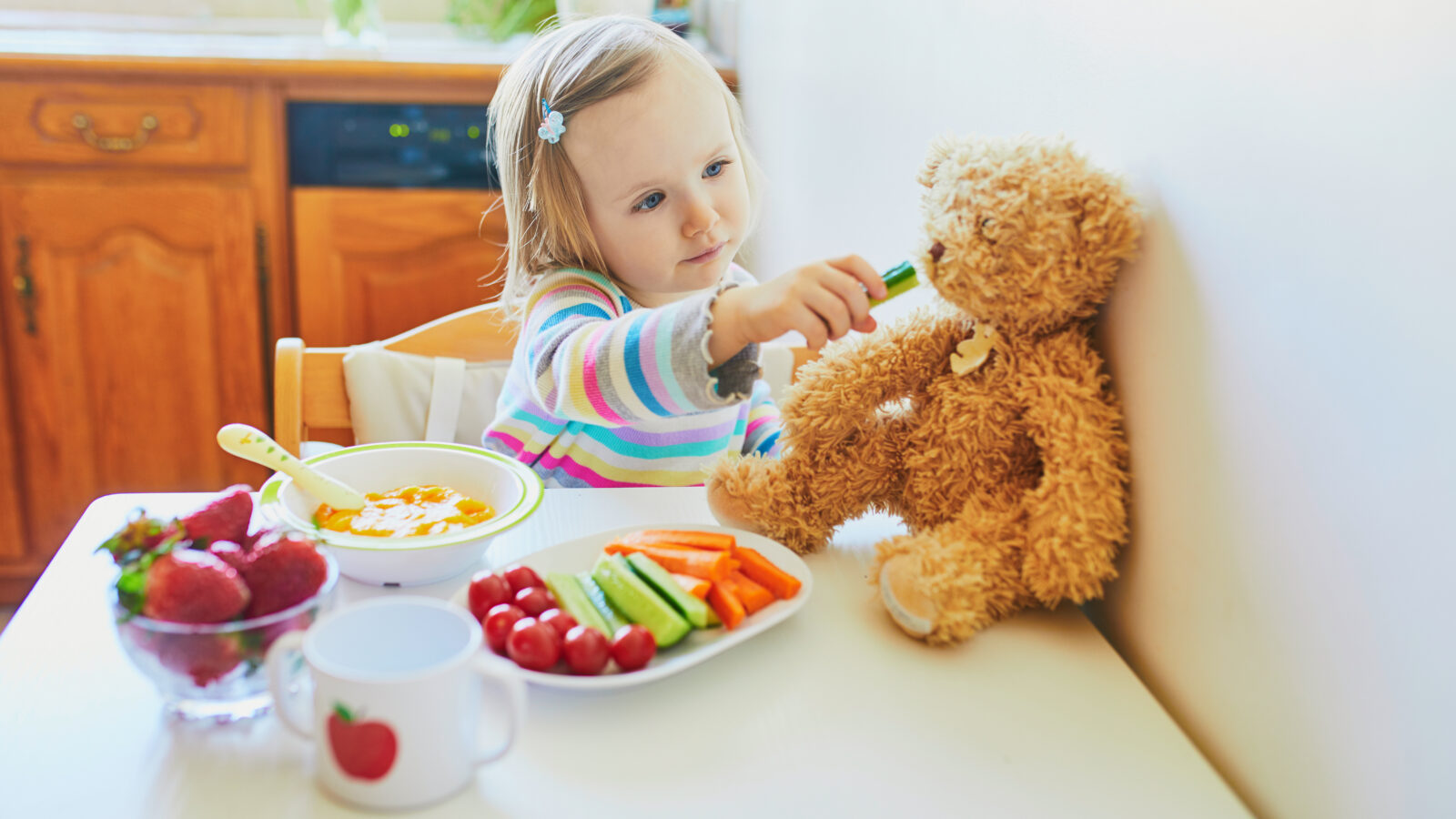
Security blankets, comfort objects, or loveys – whatever your family calls them, they are all examples of what childhood experts call ‘transitional objects’. These objects play an essential part in a child’s emotional support system, providing comfort and reassurance as they find their place in the world. This includes during transitions like entering a new early learning program.
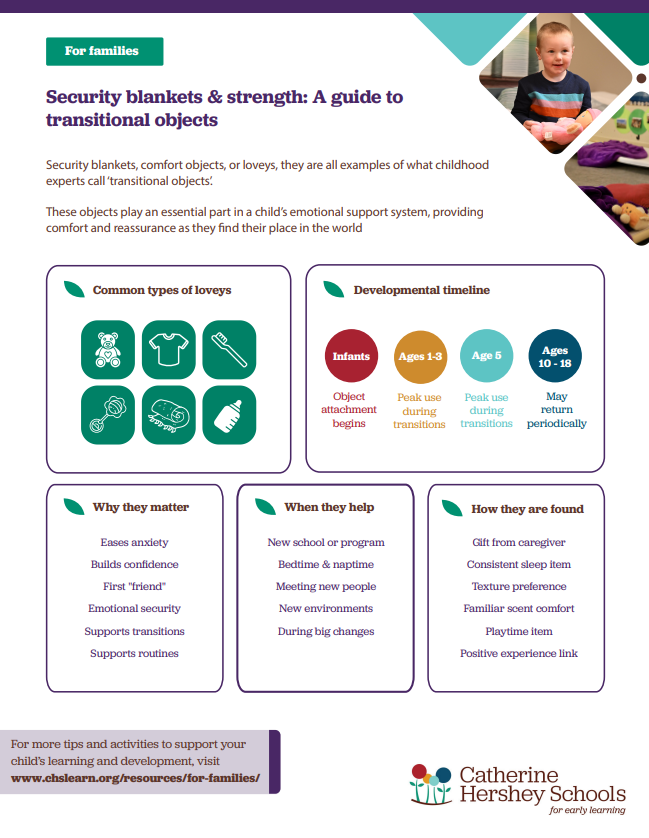
Why are transitional objects important?
Below, you’ll learn why these objects are so important.
- These objects provide continuity during change, easing any potential anxiety or fear from being in an unfamiliar environment.
- The familiarity of the item is what provides comfort to the child, and this reassurance is what helps give them the confidence to strike out on their own into interactions with other people and other environments.
Types of transitional objects
Most children choose their own comfort items, and in some cases, it isn’t the soft, cuddly kind. It may be an unusual item like a toothbrush. There is no need to worry as long as it is nothing that could harm the child.
How to support your child
If your child does not have a transitional item, it may be worth helping them find one if you think it will be beneficial. Hand-me-downs could be a great option for this.
If, for whatever reason, your child is not able to have their transitional object during the time of change, start a ritual where your child says ‘goodbye’. You can even keep your child’s transitional object in the car.
If possible, it is recommended to have two versions of the item in case one gets lost or doesn’t make it in the laundry.

How attachment changes over time
Children may start relying less on their lovey as they gain confidence in new coping skills. However, they may periodically return to it throughout their childhood and into adolescence, so it is not recommended to throw or give away the item.
Removing transitional objects from your child can cause anxiety and should be avoided. When the time is right, your child will lose interest in it naturally.
More than just a transitional tool
The benefits of these items go beyond transitioning into new environments or situations. Oftentimes, it is the child’s first ‘friend’, especially if they are an only child or the youngest sibling. It may be comforting for children who become overwhelmed in certain situations. To us, it is a stuffed animal, blanket, toy, etc. But to them, it is so much more.
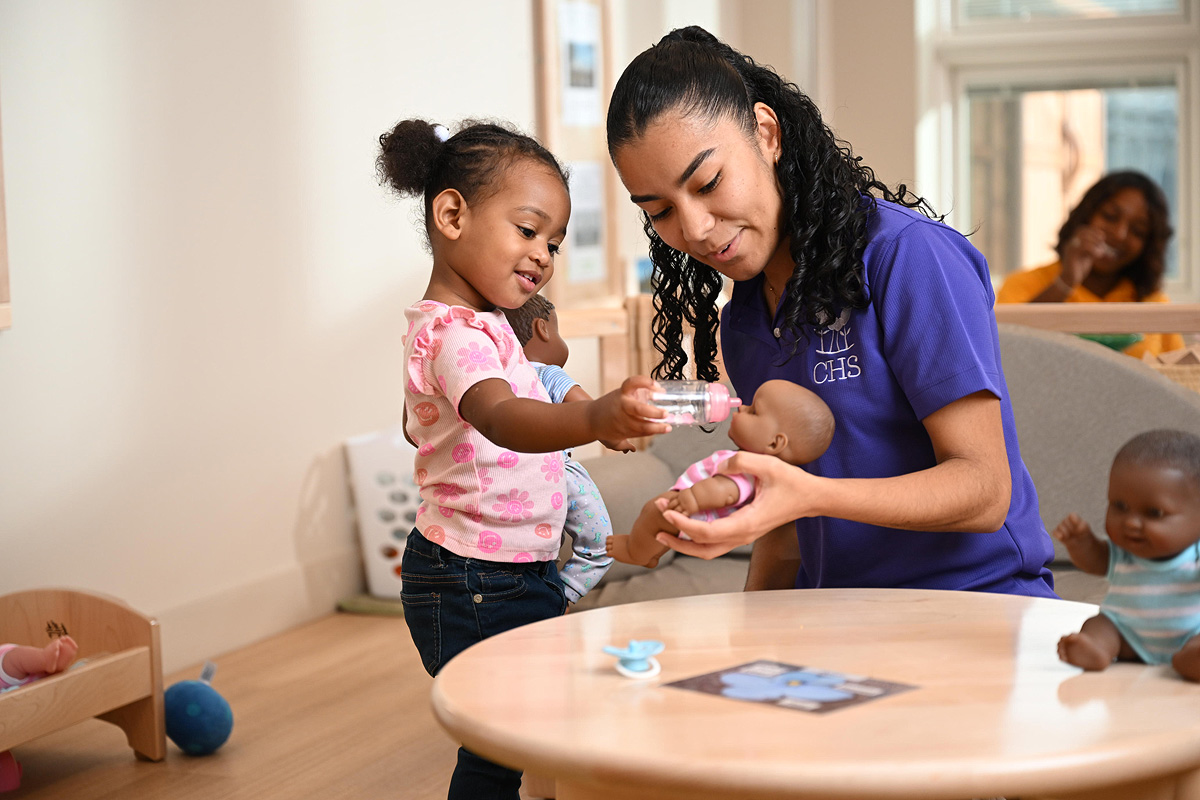
Boost your child’s development: The power of dramatic play at home
As parents and caregivers, we often observe our children engaging in dress-up and role-playing activities. While these may appear to be simple fun, they are fundamental to a child’s development,.....
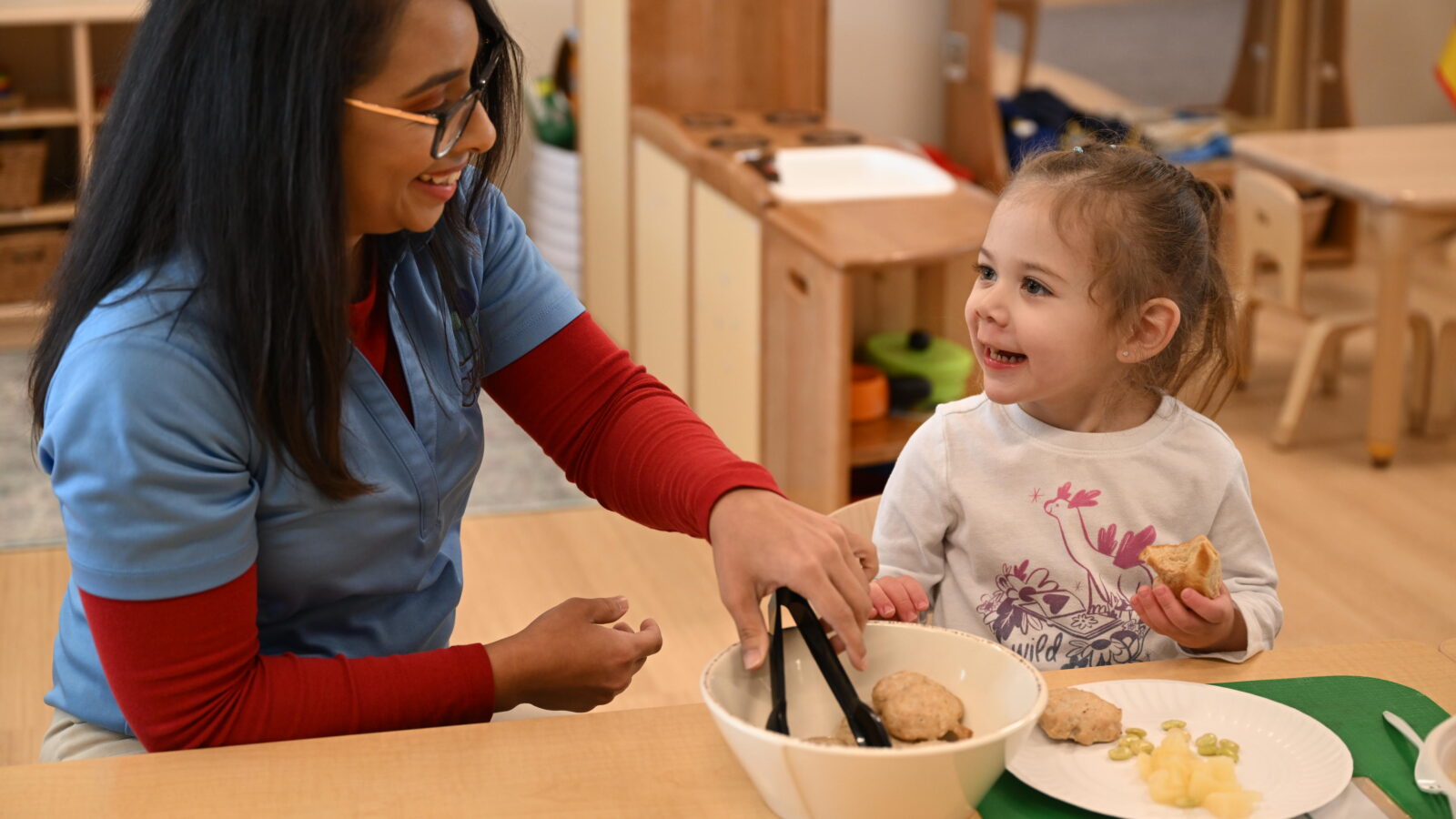
Budget-Friendly Nutrition Ideas for Families
Eating healthy is essential for overall well-being and child development, but quality food options can come with a high price tag. Many families struggle to find affordable yet nutritious food.....
Parent Guilt & Expectations About Child Care
As a caregiver, worrying about how well you are raising your child or impacting their future is common. Some feel parent guilt, thinking that they are not spending enough time.....
Keep Moving This Winter! Indoor Activities That Support Your Child’s Development
Keeping young children active indoors, especially in small spaces and on a budget, can be challenging during the winter months. However, movement is essential for their growth, supporting crucial developmental.....
